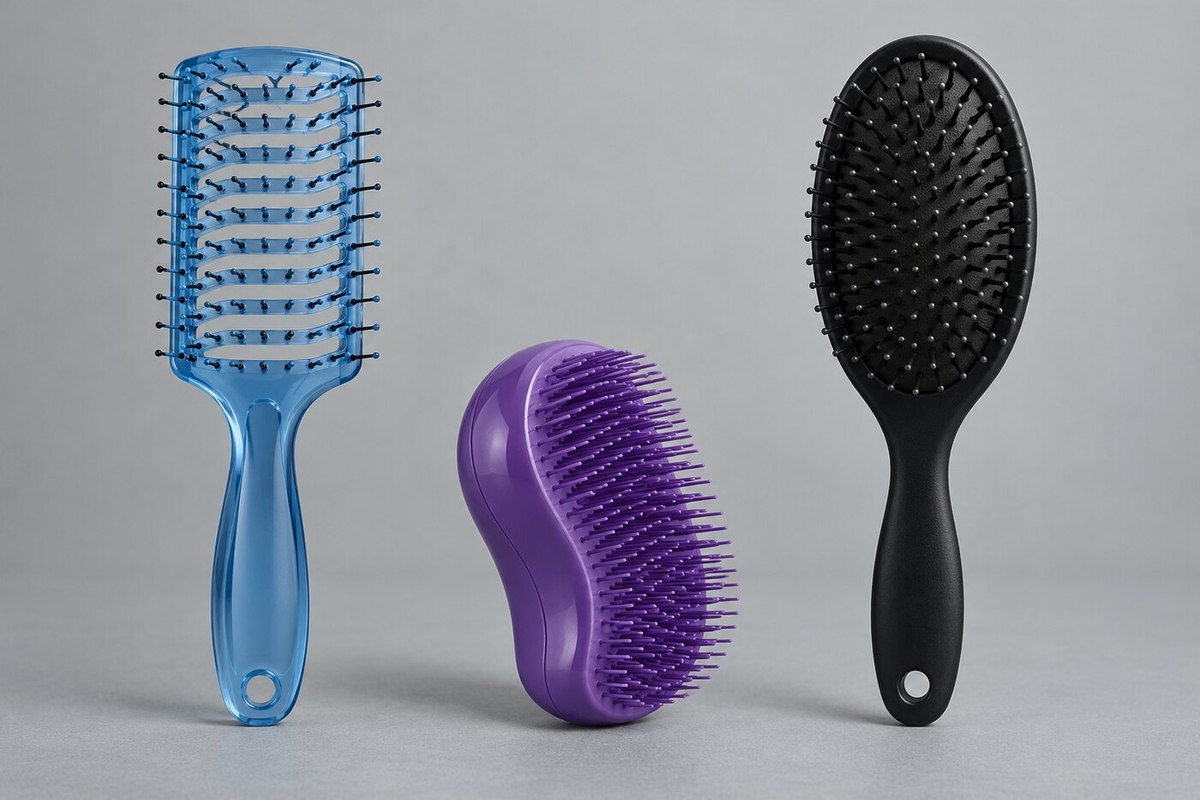
Start with our complete hair-type brush guide to match the tool to your task.
Wet Brush, Tangle Teezer, and Unbrush all offer a version of the same promise: easier detangling with flexible teeth or bristles. The useful question is which design makes your own routine easier to control. You do not need a viral brush if the one you own already removes tangles comfortably, and a higher price does not establish that a brush is gentler on your particular hair.
This is a research-based comparison of the Wet Brush Original Detangler, Tangle Teezer Ultimate Detangler, and original Unbrush Detangler. It is not a report of hands-on Bunny Ruffle Tail testing. We compare identifiable features, published prices, care considerations, and the decisions you can make before buying. We do not award breakage scores or repeat shopper testimonials as clinical evidence.
The three candidates at a glance
| Model | Price reference checked October 17, 2026 | Design to compare | Buying question |
|---|---|---|---|
| Wet Brush Original Detangler | $10.99, brand's Frost Black listing | Flexible bristles on a cushion | Does the familiar cushion design suit your routine? |
| Tangle Teezer Ultimate Detangler | $16.99, Target Pink listing | Flexible plastic teeth in two lengths | Do you prefer this tooth layout and handle? |
| Unbrush Detangler | $18, Target Midnight listing | Dual-length bristles with an open back | Is easier access for cleaning worth the premium? |
Retailer prices, colors, promotions, and availability vary. A cheaper Wet Brush color may exist at a retailer, but the brand-direct reference above provides a specific model and a clear price to compare. Do not mistake this table for a claim that these are the lowest prices everywhere.
Make sure you are comparing the same job
The word “detangler” should narrow your comparison. Do not place a Wet Brush Original beside a round blowout brush, or compare the standard Tangle Teezer with a specialty model without noting the difference. Mini versions, large paddles, softer-tooth versions, licensed prints, and newer generations can differ in size, handling, price, or construction. A brand name is not a complete product identity.
Before you shop, write down where detangling feels difficult. Is it the nape after wearing a scarf, wash-day knots, long ends, or holding a slippery handle? Those problems lead to different priorities. A wider head may help coverage but be cumbersome near a small knot. An open back may simplify cleanup without changing how your hair feels during a pass. Buy for the problem you can describe.
Wet Brush Original: a familiar place to start
The Original Detangler uses the brand's flexible IntelliFlex bristles in a cushioned design. It is worth considering if you want a conventional handled brush and a relatively accessible starting price. The name does not mean you should automatically brush all hair while wet; the best handling conditions still depend on texture, condition, and your styling goal. Brand suitability language is broader than an individual routine.
Check that the bristle tips remain intact and that the cushion is clean. If you already own an Original and it works comfortably, you have a useful baseline. A second purchase should offer a specific improvement, such as a handle you hold more securely or cleaning access you prefer. A different print can be enjoyable, but a prettier pattern alone is not evidence of a gentler detangling mechanism.
Tangle Teezer Ultimate: compare the tooth layout
The Ultimate Detangler's listing describes two lengths of flexible plastic teeth. This is visibly different from a conventional cushion brush with individual tipped bristles. Consider how that layout interacts with the size of section you actually handle. The standard version should not be confused with Fine & Fragile, Naturally Curly, Extra Gentle, or Large versions, even when their packaging looks similar.
At the $16.99 Target reference price, it costs $6 more than the brand-direct Wet Brush reference in our table. The practical question is whether you prefer the grip, tooth feel, and access to the base enough to justify that difference. A “painless” manufacturer description cannot guarantee a comfortable result through an existing knot. Resistance still means stop, support the section, and adjust the method.
Unbrush: the open back is easy to evaluate
The original Unbrush listing at Target describes dual-length bristles and a backless, vented construction. You can assess the open design without needing a dramatic before-and-after claim: can you see trapped hair easily, reach the base, and rinse the brush according to its directions? Those are everyday usability questions. They can matter even if the brush does not detangle faster for you.
The $18 reference price puts it $1.01 above the standard Tangle Teezer and $7.01 above the Wet Brush brand reference. That is a modest absolute difference, but it is still worth identifying what you expect to gain. Avoid assuming that ventilation means every heat setting is approved. Check the exact model's instructions before using a dryer, just as you would with either competitor.
Fine strands and dense hair need separate questions
If you have fine strands, evaluate how little force the brush requires to release a tangle. If you have high density, evaluate how easily you can divide the hair and reach each section. These can be the same head of hair. A full-looking ponytail does not mean the strands are coarse, and a flexible brush that only skims the surface may need smaller sections rather than harder pressure.
You can learn a great deal from one manageable section. Start near the ends, support the hair above the area, and notice whether the tool catches at the same place. If all three brushes would meet the same difficult knot, the knot needs a slower approach; it is not an invitation to see which brush can overpower it. Comfort and control are more useful than speed alone.
Curly and coily hair changes the setup
If you wear natural curls or coils, build this comparison around your existing conditioning and detangling routine. Do not test a new brush by dragging it through a dry finished style. Moisture, slip, section size, and finger detangling can change the experience substantially. Our curly-hair brush guide explains why a curl-definition tool and a knot-removal tool can have different jobs.
A detangler can separate hair without producing the curl clumps you want, while a styling brush can shape clumps without being your preferred first tool for tangles. That does not make either design a failure. Decide whether you are comparing removal of knots, the finished curl pattern, or both. If you change the product, technique, and brush together, you will not know which change made the difference.
Run a fair comparison without creating extra damage
If you own more than one candidate, use comparable sections and the same detangling conditions. Record the brush model, hair state, conditioning product, section size, and where you began. Work only until the section is manageable. You do not need to repeatedly re-tangle the same hair to generate a test, and you should not keep brushing to make one product look better on camera.
Useful observations include how often you pause, whether you need your fingers to release a knot, how secure the handle feels, and whether the bristles catch on their own rough edges. Record what you felt rather than inventing precision. “I preferred the grip on damp hands” is defensible personal experience. “This prevents 80 percent of breakage” requires a very different kind of evidence.
Why a pile of hair is a poor scorecard
The hair collected in a brush can include already-shed strands, broken pieces, and hair that was trapped in your style between washes. Comparing two piles without matching the routine cannot tell you which brush caused more damage. A longer interval between detangling can produce a more dramatic-looking pile even when the process is careful. A photograph alone cannot diagnose hair loss.
Instead, notice repeated catching, painful pulling, visible damage to the tool, and changes that persist across a normal routine. Do not use one alarming wash day to declare a product dangerous or one easy section to claim it works for everyone. If shedding or density changes concern you, seek an assessment of the cause rather than expecting a shopping comparison to settle it.
Cleaning, storage, and the cost of ownership
A brush you can maintain easily may be the best value for your household. Remove caught hair, follow the exact washing directions, and let the tool dry before storing it. The open Unbrush construction, the Tangle Teezer tooth base, and the Wet Brush cushion present different surfaces to inspect. None becomes disinfected simply because you can rinse it quickly.
If you share a bathroom, consider keeping brushes identifiable and separate. If you provide services, use a hygiene process suitable for the tool and setting; consumer washability is not proof of professional disinfection compatibility. Our brush-cleaning guide explains that distinction. A costly brush that cannot tolerate your required maintenance routine is not automatically a sensible professional purchase.
Which one is worth buying?
Start with the least expensive candidate that fits your job, feels controllable, and can be maintained properly. Wet Brush is a reasonable price baseline; Tangle Teezer is worth considering if its tooth layout appeals to you; Unbrush deserves a look if the open construction solves a cleaning or handling frustration. These are reasons to shortlist, not hands-on verdicts about which one will win on your hair.
If none of those features addresses a problem you have, keep your current brush. The complete hair-type guide can help you decide whether you need a different category altogether, while the under-$20 guide adds budget paddles and finishing options. Sometimes the most useful purchase is a smooth wide-tooth comb, not another version of the same detangler.
Detangling and relaxing brushing are different experiences
Working through a knot needs attention and an adaptable method. Relaxing brushing begins only where the hair can be handled comfortably and the person welcomes the sensation. A brush that feels effective during wash day may not be the one you enjoy for light finishing, and a soft finishing brush may not be suitable for tangles at all.
Sources and price references
Reviewed October 17, 2026. Manufacturer and retailer descriptions establish product specifications and listing prices, not independent performance results.