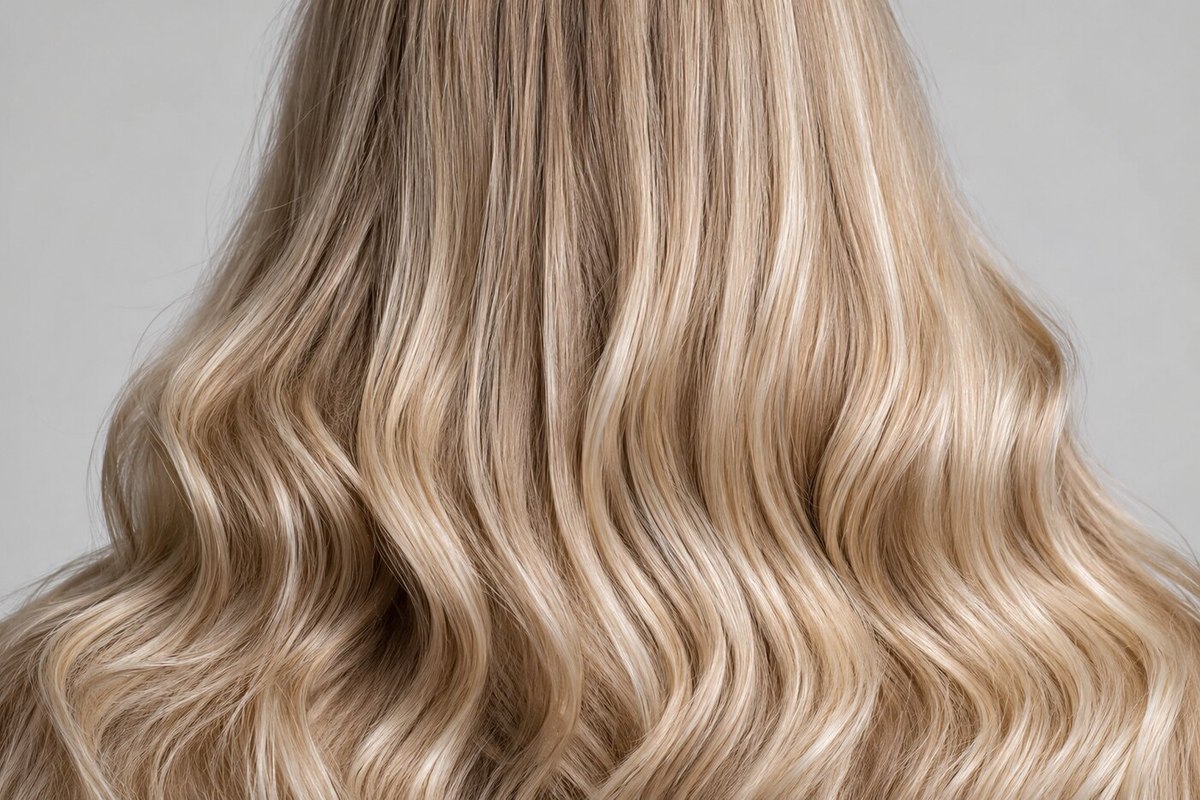
The best hair brush for your hair type is the one that does the job you actually need without asking you to pull harder. Start with your task: removing tangles, smoothing a finished style, defining curls, or shaping a blowout. Then consider strand thickness, hair density, length, condition, and whether your hair is wet or dry. Your curl pattern matters, but it cannot make all those decisions for you.
This guide connects those choices to brushes you can find at familiar retailers. The product suggestions are research-based candidates, not winners from a Bunny Ruffle Tail testing panel. You will find reasons to consider each design, reasons to skip it, and practical ways to tell whether your current brush is already doing enough.
Your brush choice at a glance
| Your hair or goal | Start by considering | What to watch |
|---|---|---|
| Fine strands that tangle | Flexible detangler or smooth wide-tooth comb | Teeth that bend without demanding extra pressure |
| Dense straight hair | Paddle or detangler, used in sections | Pins must reach the section without scraping |
| Natural curls and coils | Fingers, wide-tooth comb, or curl detangler with conditioning slip | Avoid pulling a brush through dry curls |
| Polishing straight or stretched hair | Boar or mixed-bristle finishing brush | Detangle first; keep the finish you want |
| Blowout volume | Heat-rated round brush | Barrel size, technique, and dryer heat |
| Extensions or a protective style | Installer-approved tool and method | Attachment points and style preservation |
First, give your brush one job
A brush that makes a sleek ponytail may be a poor choice for a knot at the nape of your neck. A round brush can shape your ends beautifully while being awkward for everyday detangling. Before buying anything, finish this sentence: “I need this brush to help me…” Be specific. “Get through wash-day tangles with less pulling” is a useful task. “Make my hair healthier” is too broad to evaluate.
You may need two tools rather than one expensive multitasker. For example, a flexible detangler can remove knots, followed by a mixed-bristle brush to smooth a straight style. If you wear natural curls, your second tool might be a curl-definition brush instead. Each tool earns its place by solving a different problem, not by matching the rest of your bathroom.
Understand pattern, strand thickness, and density
Straight, wavy, curly, and coily describe pattern. Fine, medium, and coarse describe the thickness of individual strands. Density describes how much hair grows across your scalp. These are separate characteristics: you can have fine strands and a very full head of hair, or coarse strands with lower density. A label such as 2A or 3C does not tell you how stiff a brush should be.
Think about your hair in sections. If a brush only skims the surface, first reduce the section size. Buying a harder brush or pressing more forcefully may not solve the actual problem. If the brush catches even on a small, conditioned section, examine its teeth and your technique. Your description of how a tool behaves is more useful than trying to fit every strand into one category.
Fine hair: choose control before coverage
For fine strands, consider a flexible detangler that lets you release a catch quickly. The Tangle Teezer Fine & Fragile listing at Target describes softer teeth than the standard Ultimate Detangler and showed $16.99 when checked October 17, 2026. That makes it a candidate worth comparing, not an automatic prescription for everyone with fine hair. A small, smooth wide-tooth comb may already meet your needs. [Source: Target]
A large brush head is not inherently damaging to fine hair, but a smaller section can make it easier to notice resistance. Support the section with your free hand and begin near the ends. If the teeth bend so much that they never separate the tangle, do not compensate with repeated forceful passes. Try your fingers, add appropriate conditioning slip, or change tools rather than insisting on one design.
Straight hair: separate detangling from smoothing
For straight hair, an everyday detangler or paddle is a sensible place to start. Conair's Velvet Touch Paddle was listed at $5.22 by Walmart during this research pass. Its broad shape makes it a budget candidate for working through manageable sections and arranging hair. It should still be judged by the finish of its pins, the way its cushion moves, and your comfort while using it. [Source: Walmart]
Once the hair is free of knots, you can decide whether you want a separate finishing brush. That decision is about the style you enjoy: a smooth surface, a looser finish, or a polished ponytail. You do not need to keep brushing simply because the brush moves easily. Stop when the hair is arranged as you want it; extra strokes are not a hair-care achievement.
Wavy hair: decide whether you want to preserve the wave
Wavy hair can create confusing shopping advice because the same person may wear several finishes. You might want defined air-dried waves one day and a smooth blowout the next. Before brushing, choose the result. If your waves are already set and you like them, running a dense finishing brush through them may change their shape. That can be an intentional styling choice, but it should not happen by surprise.
Try separating obvious tangles with your fingers before reaching for a brush. On a wash day, work with your conditioning routine and small sections. For a deliberately brushed-out look, use the lightest approach that produces the finish you want. Avoid deciding that frizz proves your hair needs a pricier brush; the timing of brushing and the style you are trying to preserve may matter more.
Curly and coily hair: start with the detangling conditions
Use a definition brush after the tangles are manageable, rather than expecting it to do every job in one pass. Denman distinguishes its classic D3 styling brush from a dedicated detangler in its own education. That is a helpful buying distinction: the tool you use to arrange curl clumps can be different from the tool you use to loosen knots. You can also choose a routine without a brush. [Source: Denman]
Bleached, fragile, gray, or changing hair
Treat condition as an adjustment to your existing hair description. Bleaching does not give everyone the same pattern or density, and gray hair does not create one universal brush category. Ask what has actually changed: more tangles, rougher ends, sensitivity, shorter broken pieces, or a finish you find harder to control. Match your response to that observation instead of buying a brush based only on age or color.
If your ends keep catching, inspect both the tool and the hair. A missing pin cap or a rough seam is a tool problem. Persistent knots in the same worn ends may need a different care or haircut decision. Brushes cannot repair split ends. For unusual shedding, scalp pain, or a sudden change in density, a product comparison cannot identify the cause; that question belongs with a dermatologist.
Extensions, wigs, locs, and protective styles
Ask the person who installed or maintains your style which tools and movements are appropriate. An “extension-friendly” label does not tell you how to work around every bond, tape, track, or wig construction. Hold the hair as instructed, keep attachment points out of unnecessary tension, and avoid treating the roots as though they were loose natural hair. A loop brush is one design you may be advised to consider.
Compare affordable candidates before upgrading
Our Wet Brush, Tangle Teezer, and Unbrush comparison explains how to compare flexible detanglers without confusing brand claims with measured results. The under-$20 shopping guide connects specific models to Target, Walmart, and Sally Beauty listings. Check the exact model and seller, since a familiar brand name can appear on several very different brushes.
If finishing is your priority, read boar bristle versus nylon before buying a mixed brush. Considering a luxury upgrade? Our Mason Pearson comparison looks at what the price can and cannot establish. A bigger budget can buy a particular construction and experience; it does not make the brush suitable for every texture or prove that it prevents hair loss.
Use the brush well, then keep it clean
Untangle accessible ends before attempting longer passes. Support the section, pause at resistance, and make the section smaller when needed. Choose wet or dry handling based on your hair and task; our wet-versus-dry guide explains the important exceptions. The finish should not depend on tolerating pain. If your scalp moves sharply with each stroke, ease off and reassess the method.
Remove trapped hair regularly, follow the maker's washing instructions, and inspect the brush as it ages. Our cleaning and disinfection guide separates household washing from professional hygiene. Finally, retire the 100-strokes rule: more brushing is not automatically better. A useful brush fits your routine, respects your hair, and lets you stop when the job is done.
Where the relaxing ritual fits
Use this guide as your starting point, then choose the supporting article that answers your next question. You do not have to buy every type of brush to understand your hair better. Begin with the tool you already own, identify its job, and notice where it helps or catches. That small amount of attention can make your next purchase much more deliberate.
Sources and price references
Reviewed October 17, 2026. Manufacturer and retailer descriptions establish product specifications and listing prices, not independent performance results.